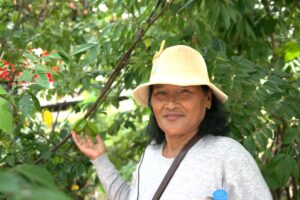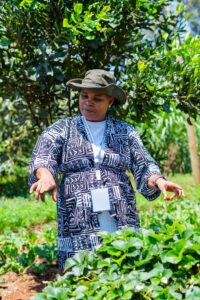
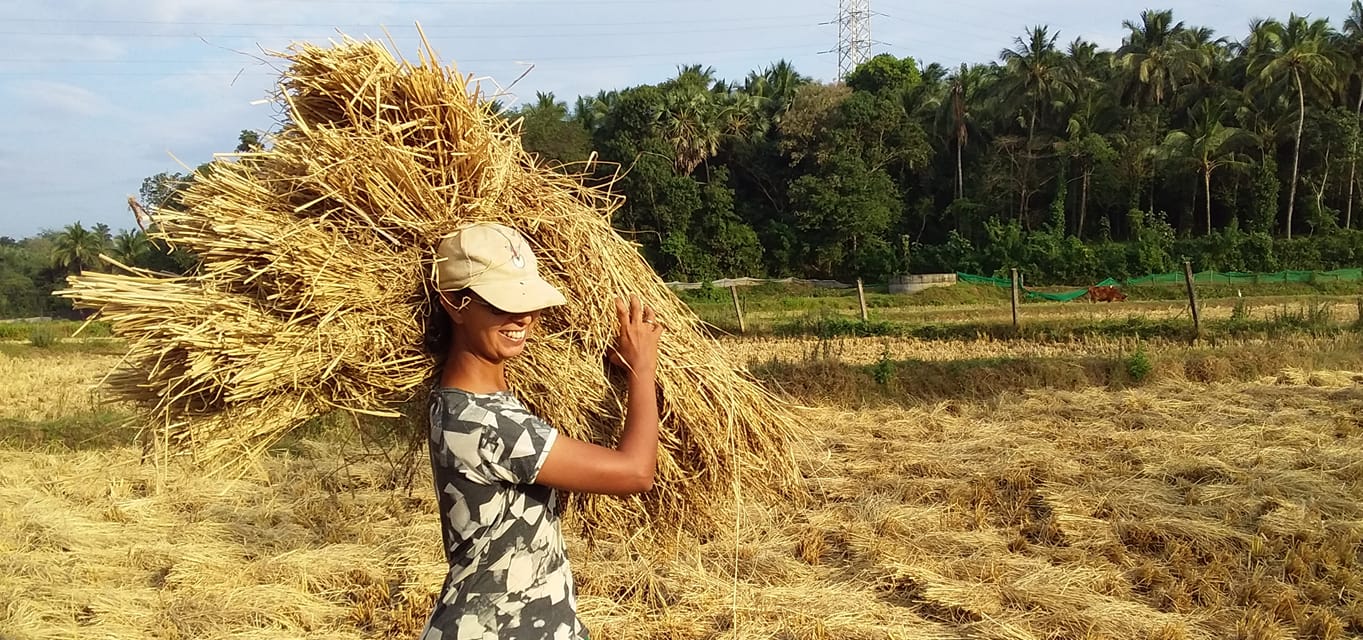
Women across the world often wear different hats on the same day, women farmers certainly do as well. Shamika Mone, is particularly impressive in the number of hats she wears, as a researcher turned organic rice and vegetable farmer, Treasurer of the Organic Farming Association of India, President of the International Network of Organic Farmers Organisations, as a storyteller and as an artist.
When she did research on organic farming, she had the will to make a change in society. “I decided to drop my salary job and got into farming as a livelihood. It is easy to advise farmers as NGOs or associations, tell them what to do or not. But to be a farmer you need different knowledge and skill sets.”
Shamika realised however that most farmers do not know about the specificities of organic farming which requires a slightly different knowledge base. “Farmers need to be in a position to make a choice on the type of farming they want to do. But to do that, to empower farmers to make a decision, you need to ensure they are informed”.
This is how the researcher and the farmer in Shamika, gave the opportunity to her talent, as both a storyteller and an illustrator, to express itself with her book, Story of Weeds.
“Story of Weeds is a simple book for complex issues”, says Shamika. “Over the years, I realised that the information available on herbicides, chemical weedicides, and herbicide-tolerant crops is often highly scientific, technical, and difficult for many people to fully understand — especially children, families, farmers, and the wider public. Yet these issues directly affect all of us: our food, soil, biodiversity, water, health, and future generations. This is what inspired me to purposefully create Story of Weeds — a simple, illustrative children’s book that makes these complex topics easier to understand and discuss.”
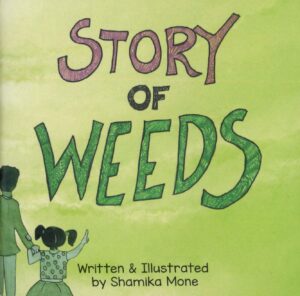
Through storytelling and illustrations, the book gently explains:
“I genuinely believe that simplifying knowledge and making it accessible is an important step towards creating informed and conscious communities. Let us continue building awareness together — one story, one child, and one conversation at a time” concludes Shamika.
FFORA has been supporting the publishing and hopes it will be distributed widely.
| Single copies are available for India (only) here. Bulk order (10+) are accepted for: – Schools & educational programmes – NGOs & awareness initiatives – Farmer groups & startups – Eco-stores and community organisations Drop a line at the contact us form and we will put you in direct touch with the author. |