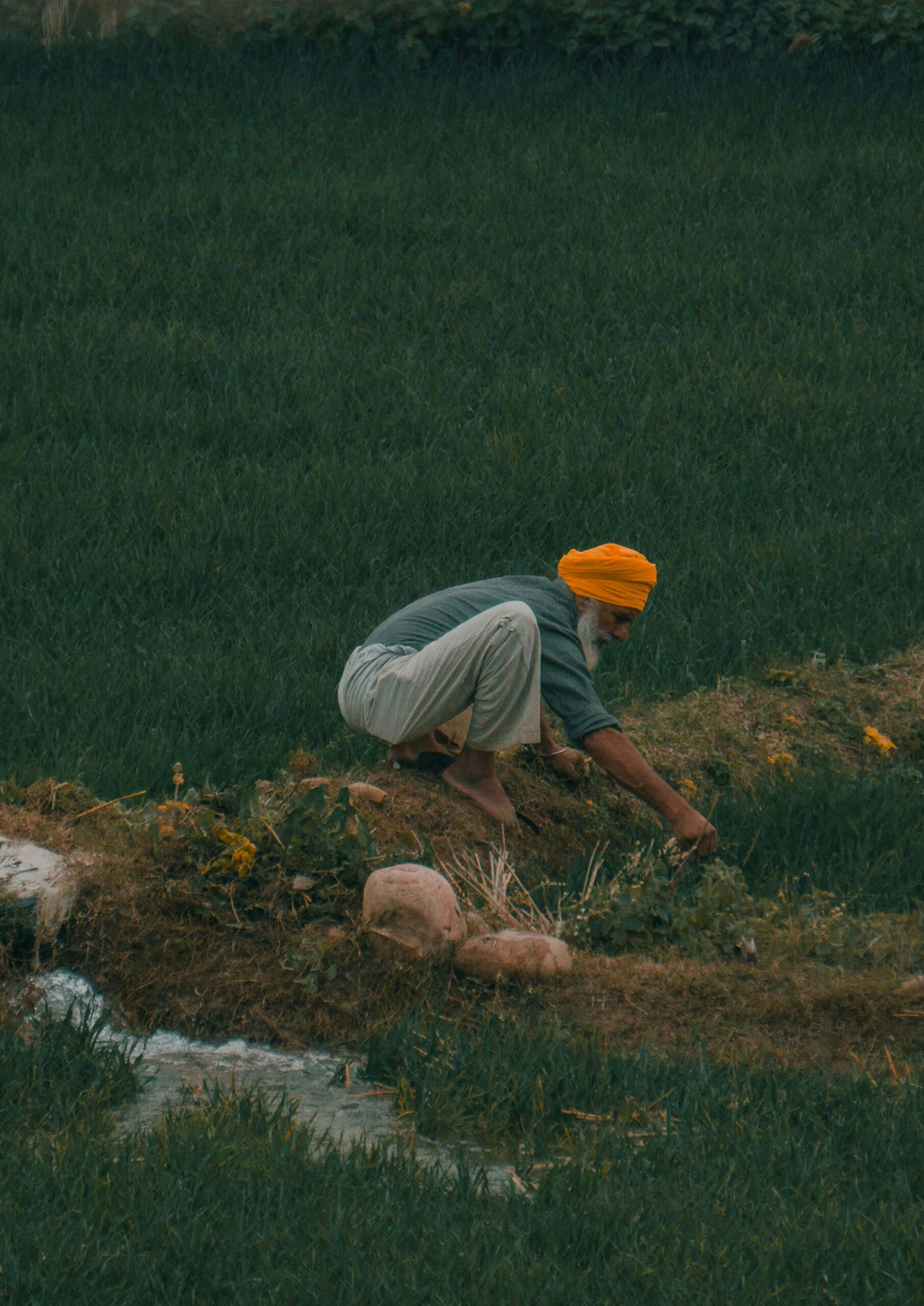
As government negotiators head to Antalya, Türkiye, this week for COP31, the annual UN climate summit, the issue of climate finance will once again be under the spotlight. In particular, the question making the rounds will be whether climate finance is reaching communities who need it the most. For instance, are smallholder farmers who have been made vulnerable by the impacts of the climate and ecological crises, able to access the funds promised to them?
The total volume of climate finance has increased (touching USD 2 trillion in 2024), relative to past years. But structural changes are urgently required to the financial systems meant to deliver these funds. More money flowing through a system that has repeatedly failed smallholder farmers, among other vulnerable communities, cannot solve the root of their problems.
A mapping of 40 climate and nature finance programmes, among 28 funding entities from public, private, and philanthropic sources this year, offers a stark message to COP31: negotiators must agree on a financial architecture that ensures that some of the trillions of dollars promised as climate finance reaches communities made vulnerable by climate impacts. Full report here
At COP29 in Baku, Azerbaijan, nearly 200 countries agreed to triple climate finance to developing countries, from the previous goal of USD 100 billion annually to at least USD 300 billion annually by 2035. The New Collective Quantified Goal on climate finance (NCQG) decision also called on all governments and private sector actors to work together to scale up financing to at least USD 1.3 trillion per year by 2035.
Last year at COP30 in Belém, Brazil, the international community reaffirmed these commitments. The headline figures are significant given the long-winded negotiations that were required to achieve consensus on the climate finance goals.
But the volume of climate finance is not the only problem. Global climate finance surpassed USD 2 trillion in 2024, but very little of this money has reached those who need it. For instance, small-scale farmers, and their representative organisations, who produce at least a third of the world’s food, who manage vast areas of the land and water, and bear disproportionate exposure to climate risks, received less than 1% of public climate finance in 2021.
The problem is also the weak international financial architecture. Money promised to smallholder farmers is being held back by procedures and systems that are unable to deliver funds on the ground as and when they are needed.
Structural features of how climate finance is designed, governed, and disbursed has systematically excluded smallholder farmers.
As negotiators and those in charge of global climate and nature funds gather at COP31, this is a critical moment to address this shortcoming and commit to changing the system.
We mapped 40 climate and nature finance programmes from 28 of the world’s largest funding entities including multilateral climate funds, development banks, bilateral donors, and philanthropic organisations. Our findings highlight structural barriers in how finance currently flows to small-scale agrifood systems.
From this analysis we identified six barriers that hinder smallholders accessing finance: i) mandatory intermediaries, ii) absence of farmers’ organisation’s voice in fund governance, iii) no funding for organisational overhead, iv) opaque and inaccessible application processes, v) debt instruments incompatible with farmer organisation risk profiles, and vi) unclear or unpredictable funding size, length, and frequency.
Of the 40 programmes, 92% of them explicitly say they support smallholders. But only 25% allow the farmers organisations to apply for funding directly. The architecture through which climate finance flows (e.g., accredited intermediaries, government endorsement requirements, debt-based instruments, opaque governance structures) was built for institutional actors, and farmers’ organisations simply do not fit the template.
Nearly half of mapped programmes give farmer organisations no role whatsoever in fund governance, not even an advisory seat. Governance is where the rules are written, and decisions are made. These bodies define eligibility criteria, compliance requirements, instrument design, and grant thresholds – design choices with deep implications on who does and who doesn’t access those funds.
The compliance requirements create further barriers. Most programmes require financial audits, complicated environmental safeguard documentation, and government endorsement letters that the majority of local farmer organisations in the Global South cannot feasibly produce – especially for small and medium grants (e.g., below $USD 500,000) where the burden is disproportionate to the risk. And even when organisations can meet these requirements, many funds offer no provision for the organizational overhead costs such as staff, admin or finance systems, audits, legal registration, and preparing technical documents. Such overhead costs provision would make it possible for farmers organizations to absorb and manage a grant. Of the 40 programmes mapped, only eight cover these costs at all.
Along with incompatible instruments, a lack of clarity on funding arrangements, the above requirements show that the current international climate financial architecture asks organisations to operate at a professional standard but make no provisions to fund this. It is a structural contradiction.
The decisions that will be made at COP31 and those made in the fund governance rooms, board meetings, and technical working groups around it will shape climate finance architecture for the next years or decade. New funding commitments will be made, and new funds will be capitalised. Accreditation frameworks will undergo review and updates. Governing boards will be constituted. New funding windows and programmes will be launched. The NCQG implementation pathways agreed in Baku and Belém are now moving into design for operationalization.
Each of those moments provides a crucial opportunity to change the direction of climate finance. Will new commitments bring funds or funding windows designed around the same accreditation system – one that only recognise farmer organizations as beneficiaries at the end of a years-long disbursement chains – or will they choose alternative pathways to really make climate finance accessible?
These choices are clear:
Do financing mechanisms have a direct-access window for farmer organizations, or does every proposal go through an accredited entity? Do farmer organisations have voting rights on the governing board, or observer status? Is organisational overhead an eligible cost, or is it excluded? Is the application process designed for a community cooperative or farmer organisation, or for an international non-profits with a dedicated grants team supported by specialised consultants?
These questions can determine whether the next round of pledged climate finance made in Baku or Belém reaches the smallholder farmers. There couldn’t be a more timely moment for correcting this, with cascading climate change impacts and ongoing geopolitical crises.
An important finding from our mapping is not just the scale of exclusion of farmer organizations. It also revealed what is working well in the assessed programmes, even where overall improvements could still be made.
The Global Agriculture and Food Security Program, for example, has a producer organization-led window which gives farmer cooperatives direct access to grants of USD 2.4 to 4 million, with farmers included in governance. AgriCord, an alliance of agri-agencies governed by farmers’ organizations, is designed explicitly around their institutional needs. The FAO Forest and Farm Facility offers direct access, with mandated farmer organizations voting rights in the governance.
Common features among these programmes include finance disbursal through grants, transparent application processes with publicly available eligibility criteria and call schedules, farmers’ representation with a decision-making role, and funding for organizational overhead alongside project activities.
An argument we hear repeatedly at climate summits is that direct farmer access to finance is too risky, too operationally complex, or incompatible with fiduciary standards. But the programs above prove these assumptions wrong. The question that remains then is: why is this approach not adopted by others? Why does the system favour the status quo and hope for different outcomes?
To simplify how farmers’ organizations can directly access finance and to make this the default approach rather than the exception. Existing and new financing mechanisms or replenishments should be required to demonstrate how farmer organizations can apply without routing their application through a government or large NGO intermediary.
Use the governance seats you hold to mandate farmers’ representation with voting rights. Observer status alone is not real inclusion. The organizations best placed to advise on whether fund design is working for farmers are their organisations who are currently excluded from the decision-making rooms.
Require operational overhead coverage as a standard condition. The most impact and the efficiency you are seeking from your funding is possible only if the money goes to the organisations you claim to be supporting.
Leverage your power and voice through the governance seats you hold in existing funding bodies. Advocate for farmer organizations’ to be able to access funds directly , and call for reduced compliance requirements for small grants that are available through transparent processes and predictable funding cycles. This advocacy must result in concrete positions in the negotiations and decision-making rooms.
Support the establishment of a farmer-led global climate finance mechanism that farmers organizations are committed to set up. Farmers’ organisations should receive adequate support to design and run a global fund that channels climate finance directly to them.
The bottomline is that more money is necessary. But money must be channeled through a robust financial architecture that meets the needs of people on the ground. What is required is a system that channels funding efficiently and effectively to support smallholder farmers in building resilience in food systems.
To learn more access the full policy brief.